

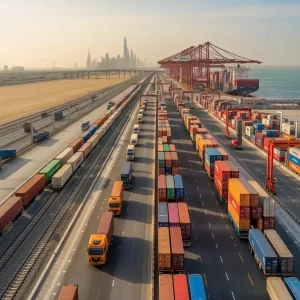





Qatar is an increasingly industrial nation with billions in investment. The industrial sector in Qatar has 1449 registered industrial firms, which boast a total investment of 233.136 billion QAR. To meet the production demands of these industries, Qatar requires a constant influx of industrial equipment and materials.
Qatar’s imports have experienced significant growth. Qatar’s imports reached QAR 12,762 million in December 2024, while November 2024 recorded imports of QAR 10,199 million. Nuclear reactors, boilers, machinery, and mechanical appliances make up 15% of Qatar’s imports. Dubai and the UAE account for nearly 8% of total imports.
This highlights the importance of Dubai to Qatar cargo and the flow of industrial material between the countries. Businesses in Dubai ship a large amount of industrial material across the border and rely on efficient cargo services.
When the material is so important and huge revenue is at stake, you need to put some thought into the shipping process. You want the material shipped without any issues and as soon as possible.
This detailed guide will walk you through some of the best practices to ensure that industrial equipment is shipped effectively without any delays. Let’s dive in.
Strategic Approach to Shipping Industrial Equipment
Every new and old business must familiarize themselves with the ins and outs of the shipping process to maximize profits and minimize delays. Look at some of the best practices experts use to ensure effective and timely shipping of industrial equipment.
1. Select the Appropriate Shipping Method
Everything goes right or wrong at this stage. This crucial decision will determine the time and cost of the shipment. Making a wrong move here means lost revenue and time.
Businesses have a choice of different shipping methods, including Sea Freight, Air Freight, and Road Freight. Each of these methods has its merits and demerits.
Sea Freight is optimal for the shipment of bulk materials as the space is sufficient and the cost is relatively low. However, this is the slowest of all the shipment methods, making it unsuitable for short deadlines. On the contrary, Air Freight is the fastest shipping mode between Dubai and Qatar but is also the most expensive.
Road Freight strikes a balance between transit time and shipment cost. The proximity between Dubai and Qatar makes this option viable. Unlike air freight, no special arrangements must be made for large equipment. Full Truck Load (FTL) and Less than Truckload (LTL) provide dedicated and shared truck space based on customer requirements.
2. Ensure Proper Packaging and Securing
Industrial equipment is extremely sensitive and expensive, making it important to pack and secure it properly before shipment.
- Disassembly: Disassembly is preferred to disassemble the parts wherever feasible to reduce space and prevent movement.
- Protection: Industrial equipment must be wrapped with shrink wraps, foam padding, and corrosion inhibitors to avoid any environmental damage during shipment.
- Securing: The last thing you need is for any equipment to get loose and damage the rest of the shipment. This is why it is important to use high-duty braces and straps to immobilize the equipment.
- Labeling: The importance of proper packaging and labeling can not be overstated. Put proper labels and handling instructions on all equipment to ensure it is not mistreated due to lack of knowledge.
Once this is done, it is time to move past the customs.
3. Adhere to Customs and Regulatory Requirements
Custom clearance is one of the most important steps in this entire process. Most of the shipments face rejection because they are unprepared or unaware. You must learn about the regulatory requirements and look for custom clearance tips.
The first step in this process is ensuring all required documents are available and ready to go. Since June 2017, Qatar has made it mandatory that all shipments be palletized on wooden forklift-friendly EUR pallets. Finally, you must be aware of the items that are prohibited and must not include them in your shipment.
Ignoring any of these steps can result in a rejection and cause delays.
4. Obtain Insurance Coverage
Getting all the important and expensive industrial equipment insured makes logical sense. The insurance must cover damage, theft, or losses during the transit.
Monitoring the shipment during transit is also important to claim insurance in case anything gets lost or damaged. This process can be complex, so you must choose the best shipping company to partner with.
5. Prepare for Delivery and Installation
Your job is not done until the equipment reaches its final destination. This is why you must always be in contact with the other party to prepare them for receiving the shipment.
This includes sharing all the necessary paperwork to ensure seamless and quick customs clearance on the other end. Moreover, ensure that the site is prepared and ready to install the equipment as soon as it arrives.
Let’s have a look at what we have discussed so far.
Summary
Qatar’s growing industry requires importing industrial equipment from Dubai and other countries. Businesses should know what needs to be done for an effective shipment. From choosing a suitable option to insurance coverage, each step holds equal value in profit maximization.
Be smart in shipment planning for hassle-free Dubai to Qatar cargo.
Al Weam Cargo: Top Choice for Dubai to Qatar Cargo
Al Weam Cargo has provided cargo from Dubai to Qatar for years and has made countless successful shipments. Our streamlined process and customs clearance expertise mean that your industrial equipment will never be stationary for long. With optimized routes and the promise of quick yet safe shipments, Al Weam has garnered the trust of several respected companies in Dubai.
Be part of our successful journeys and take your profits to unimaginable heights.