


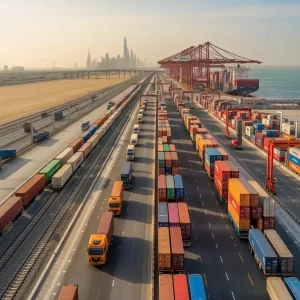
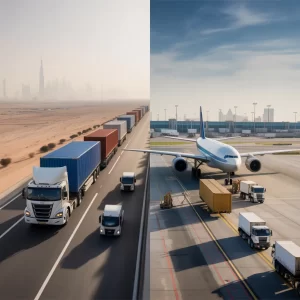


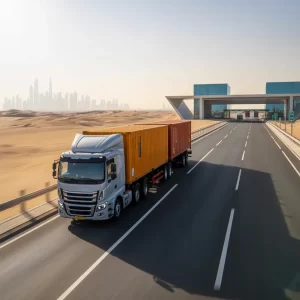
Freight forwarding companies in Dubai are constantly innovating to ensure cargo reaches its destination efficiently. One of the most effective solutions is intermodal transportation, a system that combines multiple transport modes to move goods seamlessly. For businesses sending cargo from Dubai to Saudi Arabia, shipping from UAE to Bahrain, or cargo to Qatar from Dubai, intermodal transport is proving to be a game-changer.
What Is Intermodal Transportation?
Intermodal transportation refers to the use of two or more modes of transport—such as trucks, ships, and rail—to move cargo from origin to destination without handling the freight itself at each transfer. Unlike traditional methods, intermodal systems rely on standardized containers, ensuring goods are secure, fast, and cost-efficient.
For example, a shipment may start on a truck from Dubai to the port, then move via sea to Jeddah, and finally be delivered by truck to Riyadh. This method reduces transit time, lowers damage risk, and improves reliability.
Difference Between Intermodal and Multimodal Transport
Many businesses get confused between intermodal and multimodal transport. While they are related, there are key differences:
- Intermodal Transportation: Cargo uses multiple modes of transport but ownership and responsibility change between carriers. Each leg may be handled by a different company.
- Multimodal Transportation: One carrier or contract oversees the entire journey, offering a single responsibility and unified tracking.
Understanding these distinctions helps companies choose the right solution for Dubai to GCC cargo, whether it’s shipping from Dubai to Saudi Arabia, Dubai to Jeddah cargo, or Dubai to Riyadh cargo.
Benefits of Intermodal Transport for GCC Cargo
- Faster Delivery Times: By combining the most efficient transport modes, cargo reaches destinations quicker than relying on a single method.
- Lower Costs: Intermodal systems reduce fuel consumption and port congestion, making it more affordable for shipping from UAE to Bahrain or cargo to Qatar from Dubai.
- Secure and Reliable: Standardized containers reduce handling errors, theft, and damage.
- Eco-Friendly: Using rail and sea reduces carbon footprint compared to all-truck deliveries.
- Flexibility: Works for small shipments or large-scale commercial cargo.
Top shipping companies in Dubai now leverage intermodal transport to optimize delivery routes across GCC countries, especially for high-demand routes like Dubai to Saudi Arabia cargo.
How Freight Forwarding Companies in Dubai Use Intermodal Transport
Leading freight forwarding companies in Dubai integrate intermodal solutions for their clients:
- Dubai to Jeddah Cargo: Goods are transported via sea from Jebel Ali port, then moved by trucks to inland destinations in Saudi Arabia.
- Dubai to Riyadh Cargo: A combination of trucks and rail ensures faster delivery to the capital, avoiding heavy road traffic.
- Shipping from UAE to Bahrain: Direct sea transport combined with short-haul trucking for door-to-door service.
- Cargo to Qatar from Dubai: Efficient use of sea routes reduces costs and transit time, while trucks handle final delivery.
By adopting intermodal methods, these companies ensure shipments are traceable, fast, and cost-effective, giving businesses confidence in their supply chain.
FAQs About Intermodal Transportation
Q1: What types of cargo are suitable for intermodal transport?
A: Almost all types of cargo can benefit, including containers, pallets, and bulk goods. Intermodal works best for shipments between ports, cities, or countries with mixed transport networks.
Q2: Is intermodal transportation faster than traditional trucking?
A: Yes. By combining ships, rail, and trucks, intermodal transport avoids road congestion and optimizes travel routes, reducing overall delivery times.
Q3: How does intermodal transport compare to multimodal transport?
A: Intermodal uses multiple carriers for different legs, while multimodal uses one carrier with end-to-end responsibility. Both improve efficiency, but intermodal offers more flexibility.
Q4: Can intermodal transportation reduce shipping costs in the GCC?
A: Absolutely. Optimized routes, less fuel consumption, and reduced handling fees make it cost-effective for Dubai to GCC cargo.
Conclusion
For businesses shipping from Dubai to Saudi Arabia—whether Dubai to Jeddah cargo, Dubai to Riyadh cargo, or anywhere across the GCC—intermodal transport provides a faster, safer, and more cost-effective solution. It streamlines movement by combining multiple transport modes for maximum efficiency.
As companies explore freight forwarding options in Dubai or commercial shipping to Bahrain, Qatar, and other GCC nations, adopting intermodal methods is key to a future-ready supply chain. This is further strengthened by how Dubai became a global logistics hub, giving businesses access to one of the region’s most advanced transportation networks.
Invest in intermodal transportation today and watch your Dubai to GCC cargo reach its destination faster and more reliably.