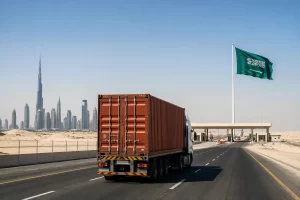
Cross border freight forwarding between the UAE and GCC involves moving cargo across multiple borders, each with its own customs rules, documentation needs, and inspection process.
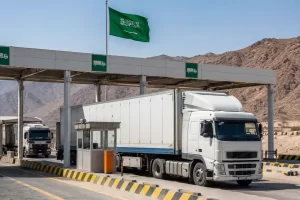
A client of mine, running a small electronics distribution business, once told me he assumed shipping to Oman would work exactly like shipping to Saudi Arabia, same documents, same process, same timeline. It didn’t. His shipment sat at the Omani border for three extra days because he’d submitted the wrong certificate format, one that Saudi customs accepted without issue but Oman didn’t. As a freight forwarder in Dubai who’s dealt with this exact confusion more times than I can count, that mix-up is honestly one of the most common mistakes I see businesses make.
Why GCC Countries Aren’t Interchangeable
This is the part that surprises a lot of first-time shippers. The GCC feels like one connected economic zone, and in many ways it is, but customs requirements still differ from country to country. Saudi Arabia, Oman, Bahrain, Kuwait, and Qatar each have their own documentation standards, inspection procedures, and sometimes even different accepted formats for the same certificate type.
This is where custom clearance services in dubai actually matter, knowing which paperwork applies to which destination before the truck leaves. A commercial invoice that clears one border can get flagged at another simply because a field wasn’t filled out the way that country expects.
What Actually Slows Down Cross-Border Shipments
Over the years, I’ve noticed the same handful of issues come up again and again:
- Using one country’s document format for a different destination
- Missing or outdated certificates of origin
- Incorrect HS code classification for the destination country
- Not accounting for country-specific inspection days or holidays
- Assuming all GCC borders operate on the same working hours
None of these are complicated problems on their own. They just require someone who’s actually paying attention to which country the cargo is actually going to, not treating the whole region as one uniform process.
Why Door-to-Door Delivery Removes Most of the Guesswork
For businesses that don’t want to manage these country-specific details themselves, this is exactly why door to door from dubai to saudi has become so common for GCC shipments.
When we took over that electronics client’s account after his Oman delay, we rebuilt his shipping documents specifically for each country he ships to, Saudi Arabia, Oman, and Bahrain now each have their own checklist on file. He hasn’t had a border hold since.
Questions Worth Asking Before You Ship
If you’re shipping across multiple GCC countries, it helps to know these answers upfront:
- Does the provider prepare separate documentation for each destination country, or use one template?
- Are they familiar with country-specific inspection schedules?
- Can they explain the difference in requirements between two GCC countries if asked?
- Do they track shipments differently depending on the border crossing involved?
If a provider can’t clearly answer these, there’s a good chance they’re treating every GCC shipment the same way, which is usually where delays start.
What Experience Actually Changes
Cross-border freight forwarding across the GCC isn’t something you get right by following one checklist. Regulations shift, inspection priorities change, and each country updates its requirements at different times. The difference between a shipment that clears smoothly and one that sits at a border usually comes down to whether someone actually double-checked the destination-specific details before the truck left.
FAQs
Is the customs process the same across all GCC countries?
No, each GCC country has its own documentation and inspection requirements, even though the region feels economically connected.
What documents are usually needed for GCC cross-border shipments?
A commercial invoice, packing list, certificate of origin, and correct HS code classification are standard, though exact requirements vary by destination.
Why did my shipment get delayed at a GCC border?
Most delays happen due to documentation mismatches, often from using one country’s accepted format for a different destination.
Can one company handle shipments to multiple GCC countries?
Yes, as long as they prepare destination-specific documentation rather than applying one generic process to every country.
Does door-to-door service help with cross-border GCC shipping?
Yes, it removes the need to coordinate separate providers for pickup, documentation, and delivery, reducing the chances of mismatched paperwork.
Conclusion
That Oman delay taught my client something most businesses only learn the hard way, the GCC isn’t one uniform shipping zone, even if it feels that way. Every country has its own rhythm, and the shipments that move smoothly are almost always the ones where someone checked the destination-specific details before the truck left Dubai.