What actually determines whether a Dubai-to-Saudi shipment moves smoothly is rarely the distance — it is the paperwork, the border queue, and whether your freight forwarder knows what changed last quarter. Shippers who rely on a genuinely knowledgeable best freight forwarding company in Dubai understand that the difference between a 48-hour clearance and a week-long hold often comes down to a single missing document or a commodity code that does not match the SABER certificate on file. The route is predictable. The customs environment is not — and 2026 has introduced enough regulatory change that even experienced shippers are catching themselves out.
The Real Route Options
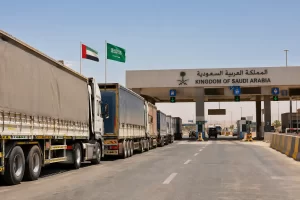
For road freight, there are two primary corridors. The northern route goes through Al Ghuwaifat on the UAE-Saudi border, connecting Dubai to Riyadh via the E611 and then the Saudi highway network. The southern route crosses at Al Batha, near Al Ain, and is used more often for cargo destined for the eastern reaches of the Kingdom or for drivers who want to avoid the congestion that builds at Al Ghuwaifat during peak periods.
How long does a truck realistically take from Dubai to Riyadh vs. Dubai to Jeddah? Under normal conditions, a truck from Dubai to Riyadh runs 12 to 16 hours of driving time — but with border processing, rest requirements under Saudi driving regulations, and any documentation hold, the total elapsed time from Dubai loading to Riyadh delivery is realistically 24 to 36 hours for a clean, pre-cleared shipment. Dubai to Jeddah is a different story: 1,200-plus kilometres across the Arabian Peninsula, typically 48 to 72 hours door-to-door when everything goes right, and considerably longer when it does not.
Sea freight between Jebel Ali and Jeddah Islamic Port or Dammam is a viable alternative for non-urgent cargo, with transit times of four to six days by feeder vessel. For time-sensitive shipments or anything where the consignee cannot accept a flexible delivery window, road remains the dominant mode despite the border friction.
What’s Changed in Saudi Import Regulations for 2026
What changed in Saudi Arabia’s import regulations in 2026 that shippers need to know is, more than anything else, the maturation and stricter enforcement of the ZATCA digital customs framework. The Saudi Zakat, Tax and Customs Authority has been tightening the link between SABER product registration, the FASEH portal for conformity, and the HS codes declared on shipping documents — and the tolerance for mismatches that existed in earlier years has narrowed considerably.
How ZATCA’s 12-digit HS code requirement affects Dubai exporters is practical and immediate: Saudi Arabia now requires 12-digit HS codes on commercial invoices and packing lists for a defined list of controlled and regulated product categories. UAE exporters who have been working with 8-digit codes — standard for most GCC trade documentation — find their shipments flagged at the border or at the SABER verification stage. The fix is not complicated, but it requires knowing which product categories are in scope before the cargo moves.
Separately, which products now require an MIMR Product Declaration before entering Saudi Arabia has expanded. The Ministry of Industry and Mineral Resources product declaration requirement now covers a broader range of electrical appliances, construction materials, and consumer goods than it did two years ago. If a product in those categories does not have its MIMR declaration completed prior to shipment, Saudi customs will not release it regardless of how clean the rest of the paperwork is.
Documentation and Compliance Shippers Get Wrong
The most common documentation mistake on shipping from Dubai to Saudi Arabia is a mismatch between the description of goods on the commercial invoice and the description linked to the SABER certificate. These two things need to match precisely — product name, model number, and HS code — because Saudi customs cross-references them electronically. A certificate issued for “LED Floodlight 100W” will not clear a shipment described on the invoice as “LED Lighting Fixture, Outdoor.”
Certificate of Origin errors are the second most frequent cause of delays. Certificates need to be issued by a UAE Chamber of Commerce and stamped by the Saudi Embassy in the UAE. Missing the Embassy attestation step — or presenting a certificate that was issued more than six months before the shipment date — is enough to hold cargo at the border indefinitely.
Halal certificates for food products, SASO certification for regulated goods, and SFDA registration for health-related items each have their own renewal cycles — and an expired certificate mid-shipment is an entirely preventable delay.
Border Crossings and Why Delays Happen
Why do shipments from Dubai to Saudi Arabia get stuck at Al Ghuwaifat? Al Ghuwaifat is the primary commercial land crossing between the UAE and Saudi Arabia, and the volume of trucks moving through it — especially around the end of the month, Ramadan lead-up periods, and the weeks before major Saudi national holidays — exceeds what the inspection lanes can process at a consistent pace. A shipment that arrives during a peak window may wait eight to twelve hours simply for a lane position. When you add a document query on top of that wait, a one-day transit easily becomes three.
What is the Al Batha border crossing and why does it affect transit unpredictably? Al Batha, located near the UAE’s Al Ain region, handles a lower volume of commercial traffic than Al Ghuwaifat, but its operating hours and inspection staffing levels are less consistent. Drivers who route through Al Batha to avoid Al Ghuwaifat congestion sometimes find the crossing closed for administrative reasons or operating at reduced capacity with no advance notice published. It works well when it works — but it introduces a different kind of unpredictability.
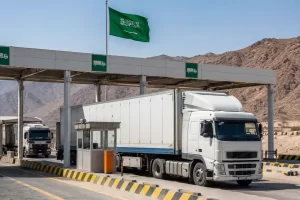
Both crossings require electronic pre-registration of the truck, driver, and cargo through the Saudi Bayan customs system before arrival. Trucks that arrive without Bayan pre-clearance are turned back.
Free Zone and Origin Rules That Affect Customs Treatment
What are the rules of origin requirements for goods shipped from UAE free zones into Saudi Arabia depends entirely on whether the goods are of UAE origin or third-country origin re-exported through a free zone. Under the GCC Common Customs Law, goods that are genuinely manufactured in the UAE — meeting the 40 percent value-added threshold — qualify for preferential tariff treatment under the GCC free trade framework. Goods that are simply stored or repackaged in a UAE free zone without meaningful processing do not. Saudi customs has become increasingly precise about this distinction.
Why are JAFZA-origin goods treated differently at Saudi Arabian customs comes down to how Saudi customs classifies Jebel Ali as a free zone. Goods originating in JAFZA that have not undergone sufficient manufacturing transformation are assessed at standard third-country duty rates, not the preferential GCC rate. This catches shippers who assume that because the shipment departs Dubai, it automatically qualifies for regional preferential treatment. It does not — origin is determined by where the goods were manufactured or where sufficient transformation occurred, not where they were loaded.
Frequently Asked Questions
Do I need a customs agent in Saudi Arabia, or can my Dubai forwarder handle clearance? Your Dubai forwarder manages UAE export documentation, but Saudi customs clearance requires a licensed Saudi customs broker (mukhallas) registered with ZATCA. Most established forwarders have a partner arrangement in-country. If yours does not, ask before your cargo moves.
What is SABER and which products need it? SABER is Saudi Arabia’s electronic platform for verifying product conformity certificates. It is mandatory for electronics, electrical equipment, toys, construction materials, and a range of consumer goods. The certificate must be active and linked to the correct HS code before the shipment departs Dubai.
Can I use sea freight for part of the route and road for the last mile? Yes. For cargo going to Riyadh or other inland cities via Jeddah, this is common: container arrives at Jeddah Islamic Port, clears customs there, then moves by Saudi domestic truck. It removes the Al Ghuwaifat variable entirely, at the cost of total transit time.
How far in advance should I book a truck to avoid Al Ghuwaifat delays? Two to three business days is workable in normal periods. In the weeks before Eid Al Fitr, Eid Al Adha, and Saudi National Day (September 23), four to five days minimum — and border queue times remain unpredictable even then.
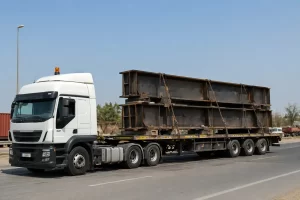
Is there a weight limit on trucks entering Saudi Arabia? Saudi Arabia enforces a 25-tonne axle load limit. Overweight trucks are turned back at the crossing, not assessed on the spot. Verify axle weights before departure from Dubai.
Managing cargo between Dubai and the Kingdom is one of the most active trade lanes in the GCC — and one of the most document-intensive. The shippers who navigate it well are the ones who treat compliance as part of logistics planning, not an afterthought. Al Weam Cargo works this lane daily and can help you move cargo cleanly from the first booking to final delivery.