The 2026 HS Code Shift: A Quick Breakdown for UAE and Dubai Exporters
If you’re exporting from the UAE to Saudi Arabia in 2026, the short answer is this: every SABER certificate issued before 1 January 2026 under the old 10-digit HS code structure is now invalid, because the platform has synced to Saudi Customs’ 12-digit codes used by ZATCA. Any freight forwarding company in Dubai still quoting lead times or paperwork timelines based on the pre-2026 SABER process is working from an outdated playbook — and that gap is exactly where shipments start stacking up at the border instead of clearing on schedule.
This wasn’t a cosmetic update. ZATCA’s move to align HS classification across its customs and tax systems means a product’s SABER certificate, its commercial invoice description, and its customs declaration all now have to reference the same 12-digit code — mismatches that used to get waved through on the old system now trigger a hold. For exporters, that means the compliance work has shifted earlier: HS code verification now has to happen at the quoting stage, not the morning the truck is loaded.
What the January sync means in practice:
- Pre-2026 SABER certificates stop working for new shipments, even if the product hasn’t changed.
- Code accuracy now has to be consistent across every document, not just the SABER platform.
- Reclassification errors surface as border holds, not desk rejections.
Crucial SABER Platform Changes You Cannot Ignore This Year
Beyond the code sync, three changes to the Certificate of Conformity process are catching UAE exporters off guard this year:
- PCoC (Product Certificate of Conformity) now must match the new 12-digit code per product line — a PCoC issued under an old code doesn’t carry over automatically.
- SCoC (Shipment Certificate of Conformity) is still required per consignment, but SASO’s Appendix 1 product categories now need a MIMR Product Declaration filed before the SCoC can be issued, in effect since 18 June 2026.
- A July 2026 SASO notification added roughly 130 additional HS codes — steel, pipes, cement, paints, abrasives, and other building materials — to the list of products requiring SABER certification, effective from mid-August 2026.
Step-by-Step Compliance Checklist for Cross-Border Logistics
The exporters handling this smoothly treat SABER compliance as a pre-shipment process, not a border-day scramble. Whether you run your own export desk or work with a dubai to saudia cargo service, the sequence that actually holds up at the border looks like this:
- Confirm your product’s current 12-digit HS code against the latest SASO/ZATCA list — don’t assume last year’s code still applies.
- Check whether your product category falls under SASO Appendix 1; if it does, file the MIMR Product Declaration before requesting the SCoC.
- Renew the PCoC per product line if it was issued before the code sync.
- Issue the SCoC per consignment, not per order — one certificate doesn’t cover multiple shipment dates.
- Match the HS code across the commercial invoice, Certificate of Origin, and customs declaration — inconsistency here is the single most common cause of a documentation hold.
None of this is complicated in isolation. What trips exporters up is sequencing — submitting a SCoC request before an MIMR declaration clears, for instance, or discovering a wrong HS code only after the truck has already left Dubai. A mismatch between the declared HS code and the product documentation can lead to delays, additional checks, or clearance issues at the Saudi border.
How Leading Logistics Experts Mitigate Batha Border Delays
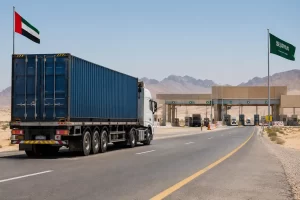
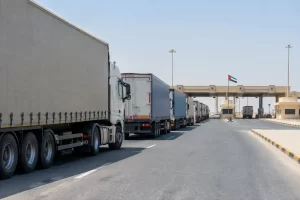
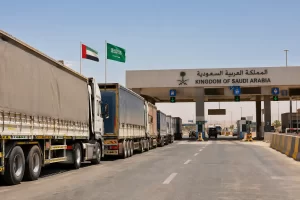
On the ground at Al Ghuwaifat and Al Batha, the pattern this year has been consistent: trucks with clean, pre-validated SABER documentation clear in hours, while shipments can get stuck at Al Ghuwaifat due to incorrect HS codes, missing MIMR declarations, incomplete paperwork, or additional customs inspections. Shipments can also get stuck at Al Batha because of SABER or MIMR discrepancies, customs-system issues, document verification, inspections, and heavy border traffic.
Top freight Forwarders in Dubai 2026 aren’t avoiding these delays through luck — they’re pre-validating every certificate against the live SABER platform 48 to 72 hours before dispatch, staggering departure times to avoid the daily queue peak, and keeping a customs broker on standby with direct platform access rather than leaving the driver to sort out a hold at the gate.
What that looks like operationally:
- Certificates checked against the live SABER database, not a cached PDF, before the truck leaves.
- Dispatch windows planned around known peak-queue hours at Al Batha.
- A broker on call who can amend a declaration in real time rather than waiting for a desk to reopen.
Conclusion & Future-Proofing Your GCC Supply Chain
The regulatory floor keeps rising, and exporters still treating SABER as a one-time setup rather than a per-shipment check are the ones absorbing the delays this year. If you’re planning regular shipping from dubai to saudia arabia, the practical move is building HS code verification and MIMR screening into your export process now, not after the next SASO notification adds another product category to the list.
The 2026 floor, in three lines:
- Verify the code before you quote the shipment, not after.
- Treat MIMR and SABER as sequential steps, never parallel ones.
- Partner with a broker who checks the live platform, not last quarter’s rules.
FAQs
What changed in the SABER certification process for UAE exporters in 2026?
SABER synced to Saudi Customs’ 12-digit HS code structure used by ZATCA, effective 1 January 2026. Any certificate still referencing the old 10-digit code structure is no longer valid for new shipments, even if the underlying product hasn’t changed.
Are SABER certificates issued before 2026 still valid?
No. Certificates issued under the pre-2026 HS code structure don’t carry over automatically. Exporters need to reclassify under the new 12-digit codes and reissue affected PCoCs before shipping.
What’s the difference between a PCoC and an SCoC?
A PCoC (Product Certificate of Conformity) covers a product line and must match the current HS code. An SCoC (Shipment Certificate of Conformity) is issued per individual consignment — one PCoC doesn’t eliminate the need for a fresh SCoC on each shipment.
What is an MIMR Product Declaration and when is it required?
It’s a declaration required, since 18 June 2026, for products falling under SASO Appendix 1. It must be filed and cleared before an SCoC can be issued for those product categories — filing it out of sequence is one of the most common causes of a stalled shipment.
Which products were newly added to SABER requirements in 2026?
A July 2026 SASO notification added roughly 130 additional HS codes, mainly building materials — steel, pipes, cement, paints, and abrasives — effective from mid-August 2026.
How can exporters avoid delays at the Al Batha border?
By validating certificates against the live SABER platform 48–72 hours before dispatch rather than relying on a cached document, and by having a broker available to amend a declaration in real time if a mismatch surfaces at the crossing.