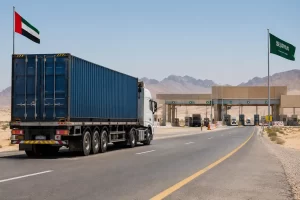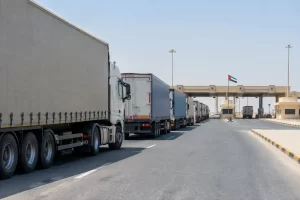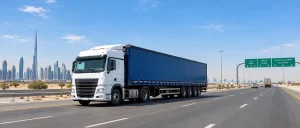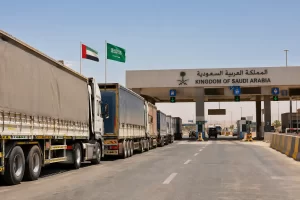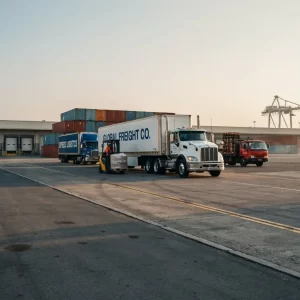
A trader in Al Quoz has a truck half-loaded with auto parts for a buyer in Riyadh. The invoice is printed, the packing list matches, and the driver is ready for the Ghuwaifat crossing. Then the Saudi importer’s broker calls with a request: send the sales contract and proof of payment as well. Calls like this are becoming more common. If you’re comparing options for the best freight forwarding company in dubai, one good test is how clearly a forwarder can explain this year’s Saudi customs changes.
The short answer: Saudi Arabia made two major customs changes in 2026. The first was a voluntary disclosure framework for correcting customs errors. The second was a set of amended customs procedure and bonded-zone rules, which took effect in June.
What Changed in Saudi Arabia’s Import Rules in 2026?
1. The customs voluntary disclosure framework (early 2026). ZATCA published new voluntary disclosure controls for customs violations in the Official Gazette on 30 January 2026, effective 30 days after publication. The framework covers errors in commodity classification, customs valuation, country of origin and declaration data.
2. Amended customs procedures and bonded-zone rules (June 2026). Governor Decision No. 13-99-1448, dated 18 June 2026, was published on 26 June 2026 and took effect the same day. The main changes for shippers are:
- Certificates from government agencies must reflect the actual nature of the goods.
- Based on risk, ZATCA may ask for extra pre-clearance documents, including invoices, sales contracts, payment records, letters of credit and non-tampering certificates.
- A single consignment shipped under one transport document and owned by one party generally cannot be split.
- Bonded zones now have a five-year maximum storage period, and eligible AEO traders can defer declarations and duties on goods coming from suspended areas.
What These Changes Mean for Shipping from Dubai to Saudi Arabia
Most shipping from Dubai to Saudi Arabia moves by road, and a paperwork gap usually shows up at the border, where there is little time to fix it. Before 2026, a clean invoice and certificate of origin often got a truck through. Now Saudi customs can ask for the commercial trail behind the goods: who paid, how much, and under what contract. A discrepancy is not just a correction on paper anymore. It can hold a loaded truck at Al Batha while documents move between Dubai and the importer.
What Shippers Should Check Before Their Cargo Leaves Dubai
- A commercial invoice whose value matches the payment records
- A certificate of origin, where preferential treatment applies
- The correct HS code, confirmed with the Saudi importer
- Product certificates or registrations that match the goods exactly
- Correct consignee and importer details
- A sales contract and payment proof, ready to send if requested
- One consignment kept on one transport document, not split
How 2026 Changes Can Affect Dubai to Saudi Cargo
The biggest shift is in timing. Document checks that used to happen at the border now need to happen before loading. The shipper, the Saudi importer, the customs broker and the freight forwarder all need to agree on classification and value before the truck moves. These rules are only one part of how cargo actually moves on this lane, alongside route choice, border crossings and transit times, which are covered in more depth in Dubai to Saudi Arabia Cargo: Routes, Regulations, and Reality.
What Shippers Should Do Differently in 2026
Review past declarations for recurring classification or valuation errors. Disclosure only earns a waiver if it is made before ZATCA begins an inspection, audit or investigation. Keep a digital file for each shipment with its contract, invoice and payment proof. Finally, ask your Saudi importer which documents their broker now asks for as standard.
Conclusion: In 2026, whether a Dubai to Saudi shipment clears smoothly depends on accurate documentation, correct tariff classification, honest valuation and preparation done before the truck leaves Dubai.
FAQs
What documents are needed to import goods into Saudi Arabia in 2026?
The standard set is a commercial invoice, a packing list, a certificate of origin where relevant, and any product certificates. Under the June amendments, customs may also request sales contracts and payment records.
What happens if a customs declaration contains an error?
If you find the error before ZATCA does, you can file a voluntary disclosure. Qualifying disclosures may receive a full waiver of the violation, but any duty difference still has to be paid within 30 days of the assessment.
What is Saudi Arabia’s 2026 customs voluntary disclosure program?
It is a formal way to self-report customs declaration errors. Smuggling cases are excluded, and ZATCA decides on complete applications within 30 days.
How can Dubai shippers reduce customs delays?
Confirm the HS code and value with your importer before loading, and keep the full set of commercial documents ready to send. Fixing these details in Dubai is much faster than fixing them at the border.