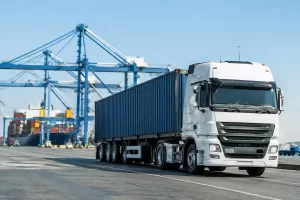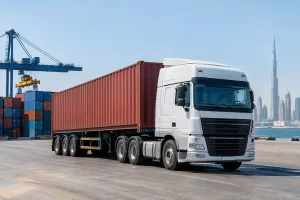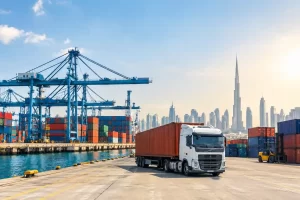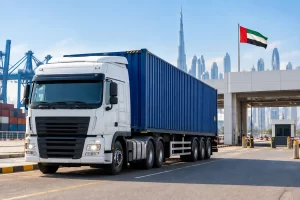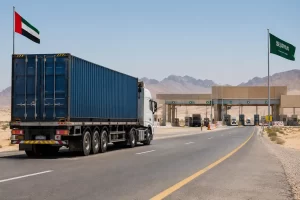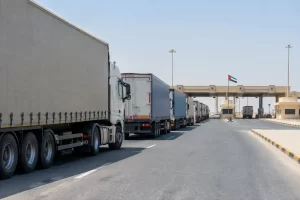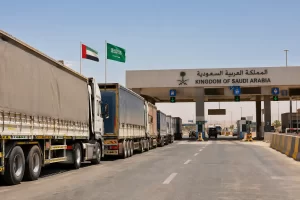
The first time I watched a truck I was responsible for sit at Al Ghuwaifat for three days, nothing was wrong with the cargo. The problem was one digit in an HS code on the invoice. After years on this lane, I’ve learned that most border delays are decided in a Dubai office long before the truck reaches the border. That’s why choosing the best freight forwarding company in Dubai has less to do with trucks and prices, and more to do with how carefully the paperwork is checked before loading.
What Actually Happens at Al Ghuwaifat
Al Ghuwaifat, on the UAE side, faces Al Batha in Saudi Arabia. Together they form the only commercial land crossing between the two countries, so almost every Dubai-to-Saudi road shipment passes through the same point.
Most shipments get stuck there for one of four reasons: document mismatches, missing or invalid SABER certificates, incorrect HS codes, or congestion and system slowdowns on the Saudi side. The first three can be prevented. The fourth can only be planned around.
Clearing the UAE side is usually quick. The real inspection happens at Al Batha, where Saudi customs checks every detail against what was declared electronically.
The Paperwork Problems I See Most Often
Here are the issues that hold up trucks most often in 2026:
- SABER certificates. Regulated products need a Product Certificate of Conformity (PCoC), plus a Shipment Certificate (SCoC) for each consignment. If either one is missing or expired, the truck waits.
- HS code changes. Since January 2026, SABER uses 12-digit HS codes aligned with ZATCA. Certificates issued under old codes are no longer valid, and many exporters still don’t realise this.
- Invoice and packing list mismatches. If the declaration says 400 cartons and the packing list says 398, that alone can trigger a physical inspection.
- Origin rules. Goods coming out of UAE free zones are generally treated as foreign under Saudi rules of origin. They may not qualify for GCC duty exemption, which often surprises shippers.
In mid-2026, regional trade reports described truck waits at the crossing stretching from hours to several days during busy periods. Those delays hit the trucks with messy paperwork hardest.
Anyone planning regular shipments should work through a Dubai to Saudi Arabia Cargo Full Guide before the first load. Knowing which certificates your product category needs saves more time than any fast truck.
How Dubai Forwarders Keep Cargo Moving
Good forwarders in Dubai treat the border as the final check, not the first. Before a truck is loaded, we cross-check every document and confirm SABER status. We also make sure the HS codes on the invoice, certificate and declaration match exactly.
When you’re shipping from Dubai to Saudi Arabia, timing matters too. Loads that reach the border just before Saudi public holidays or at month-end often meet longer queues. Leaving a day earlier can make a real difference.
The choice between a full truck (FTL) and a shared load (LTL) matters as well. In a shared load, one shipper’s paperwork problem can delay everyone’s goods on the truck.
Frequently Asked Questions
Why is my Dubai to Saudi shipment stuck at Al Ghuwaifat?
It’s usually a documentation issue, such as a missing SABER certificate, a mismatched HS code or inconsistent invoice details, rather than a problem with the goods.
How long do trucks normally wait at the UAE–Saudi border?
With complete paperwork, clearance often takes a few hours. Delays of one to several days are usually linked to document errors, inspections or congestion.
Do free-zone goods clear customs easily in Saudi Arabia?
Not always. Goods from UAE free zones are generally treated as non-GCC origin and may face duties or extra checks.
How can I avoid delays at Al Ghuwaifat?
Confirm SABER certificates and 12-digit HS codes before loading, make sure every document matches, and avoid peak border days where possible.